
From HOXTON back to the CITY OF LONDON: GUILDHALL and ST.PAUL’s CATHEDRAL
Tabernacle St.

Public Fountain
Former London Fire Brigade Station
Singer St.
CENTRAL FOUNDATION BOYS SCHOOL
Leonard St.
Chapel
From HOXTON to GUILDHALL and ST.PAUL’s……………………………………..
In the early 2000s, Banksy spent considerable time in Shoreditch's now-defunct Dragon Bar on Leonard Street. He was known to hang out there, host small exhibits, and mingle with other local artists and street art pioneers
City Rd.
BUNHILL FIELDS, a Non-conformist burial ground
The HONOURABLE ARTILLERY COMPANY Headquarters
WESLEY’S CHAPEL
House
SUSANNA ANNESLEY MONUMENT
Site of GUN FOUNDRY
https://londonist.com/2015/10/london-s-forgotten-disasters-explosion-in-moorfieldshttps://londonist.com/2015/10/london-s-forgotten-disasters-explosion-in-moorfields
Finsbury Square
The man who invented Christmas crackers
Chiswell St.
Former WHITBREAD BREWERY
Beech St.
Site of the GLOVERS’ HALL
Golden Lane
BANKSY’s artworks
Former CRIPPLEGATE INSTITUTE
Fann St.
JEWIN WELSH CHURCH
https://www-capeljewin-org.translate.goog/hanes?_x_tr_sl=cy&_x_tr_tl=en&_x_tr_hl=en-US&_x_tr_pto=wapp&_x_tr_hist=true
French: https://www-capeljewin-org.translate.goog/hanes?_x_tr_sl=cy&_x_tr_tl=fr&_x_tr_hl=en-US&_x_tr_pto=wapp&_x_tr_hist=true
Huguenot French Fanmakers

Following the Revocation of the Edict of Nantes in 1685, French Protestant (Huguenot) refugees revitalized London's handheld fan-making industry. Many settled in the Cripplegate and Spitalfields areas. The Worshipful Company of Fan Makers—which received its Royal Charter in 1709—held its early common halls nearby
Fortune St.
Site of the FORTUNE THEATRE
The original Fortune Theatre (built in 1600) is one of the most important historical sources for understanding Elizabethan theatre. Because its original building contracts still survive, it provides historians with the clearest, most detailed blueprint we have of how Renaissance playhouses were constructed and operated
Whitecross St.
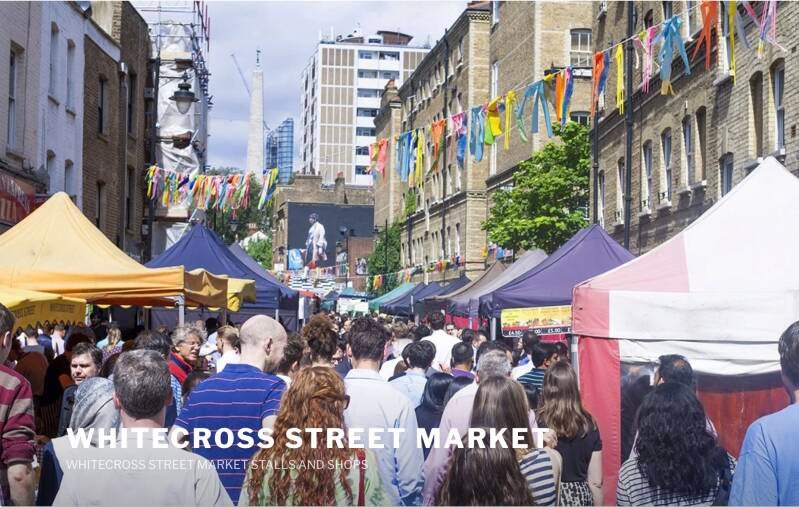
Street Food Market and eateries
Silk St.
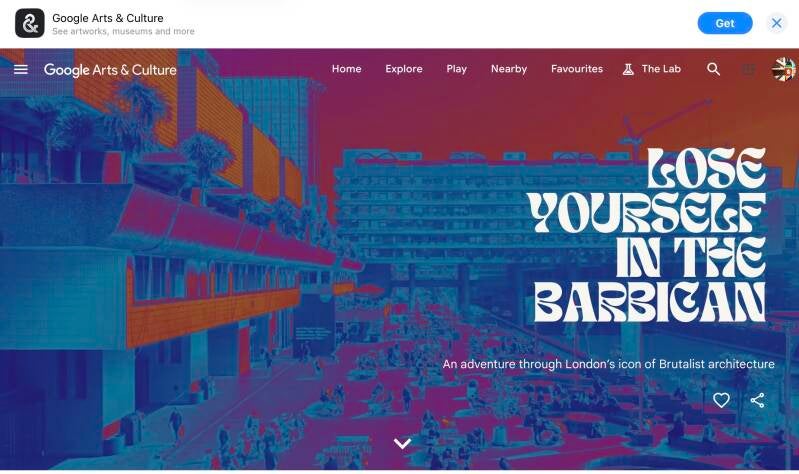
THE BARBICAN CENTRE
https://artsandculture.google.com/project/barbican
THE BARBICAN ESTATE
The Barbican Estate, or Barbican, is a residential complex of around 2,000 flats, maisonettes and houses in central London, England, within the City of London. It is in an area once devastated by World War IIbombings and densely populated by financial institutions, 1.4 miles (2.2 km) north east of Charing Cross.[1] Originally built as rental housing for middle and upper-middle-class professionals, it remains an upmarket residential estate.
Moor St.
Fore St.
Created outside (before) the London city walls, and thereby got its name
SALTERS HALL
MINOTAUR artwork
ST. ALPHAGE GARDENS
Site of ST.ALPHAGE LONDON WALL or CRIPPLEGATE Church
www.patrickcomerford.com/2020/01/elsyng-spital-and-sites-of-two.html
Remains of the chapel of ELSYNG SPITAL
ROMAN and ANGLO-SAXON WALL, originally part of the previous ROMAN FORT
Site of CURRIERS HALL
BREWERS HALL
WW2 FIRST BOMB
On this site at 12.15 am on the 25th August 1940 fell the first bomb on the City of London in the Second World War.
Wood Lane
Barbican Estate
ST.GILES CRIPPLEGATE Church
Site of the CRIPPLEGATE
https://www.flickr.com/photos/eisenphotovideo/albums/72157605091400110/
https://www.londonremembers.com/subjects/london-wall?memorial_id=999C
BARBERS HALL
Roman Wall (street)
PLAISTERERS HALL
Site of Silver Street
Noble St.
Site of ST.OLAVE’s Church and graveyard
WILLIAM SHAKESPEARE lodged here. The house and workshop of the MOUNTJOYS, tiremakers
PLAISTERERS GARDENS
ROMAN WALL (originally west portion of the Fort)
Site of COACHMAKERS HALL
ST.ANNE & ST.AGNÈS Church
Gresham St.
GOLDSMITHS HALL
WAX-CHANDLERS HALL
Wood St.
Bell tower of ST.ALBAN THE MARTYR Church
Love Lane
Site of ST.MARY ALDERMANBURY Church and churchyard
First mentioned in 1181, destroyed by the Great Fire in 1666, rebuilt by Wren, destroyed by bombing in 1940, the remaining fabric removed to Westminster College (who placed the plaque), Fulton Missouri, USA, 1966 and restored as a memorial to Sir Winston Churchill.
BUST of WILLIAM SHAKESPEARE. MEMORIAL to John HEMINGE and HEMINGE, fellow actors and personal friends of Shakespeare. They published his works.
Aldermanbury (street)
Former CHARTERED INSURANCE INSTITUTE
Glass Fountain
In 2018 the CII sold Aldermanbury to the Corporation of London and moved to 21 Lombard Street. The CII has since moved again to 20 Fenchurch Street, sharing a floor with the Chartered Institute of Securities and investments.
GUILDHALL, sprawling architectural complex
https://gilbertscott.org/buildings/guildhall-london
Guildhall…
North Wing. 1950s. Sir Giles Gilbert Scott
West Wing, opened 1975. Richard Gilbert Scott
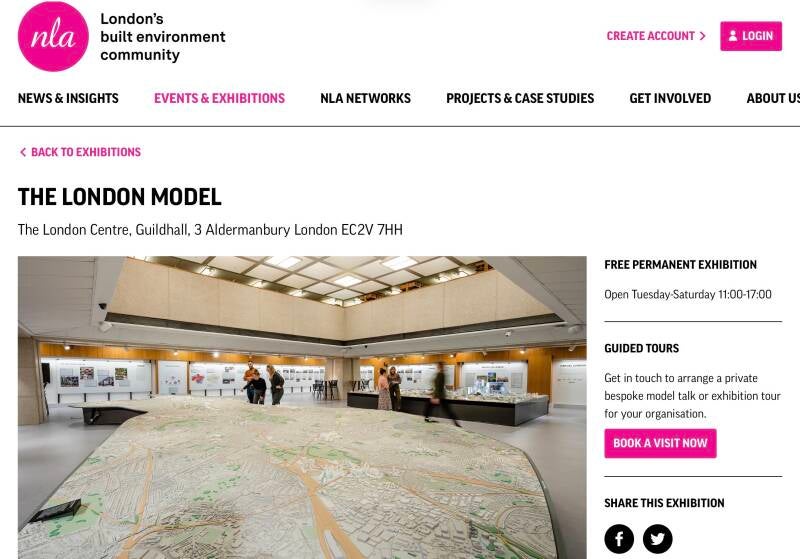
Library. NEW LONDON ARCHITECTURE (London model)
Guildhall Yard
West Wing
Repetition of vertical fins and by the sculptural complexity of the use of faceted shapes of gothic character for the projecting aldermen’s court room and the arcade connecting with the Guildhall itself, it is, perhaps, an example of what Ernő Goldfinger dismissed as “pop modern”.
Medieval Great Hall
Built between 1411 and 1440, it is the third-largest civic hall in England and the only surviving secular stone structure from before the Great Fire of London
Crypts
Situated directly beneath the Great Hall, these are the largest surviving medieval crypts in London. They feature ribbed vaulting supported by Purbeck marble and limestone columns
Entrance Porch façade: Hindustani (saracenic)-gothic George Dance the Younger.
Guildhall Art Gallery. Designed R.G.S.
4,500 works spanning over 400 years from the 16th century, with a strong focus on 19th-century Victorian paintings, portraits of notable figures, and depictions of London life. The building integrates the excavated remains of London's Roman Amphitheatre, discovered in 1987 and opened to the public in 2002, providing a unique archaeological complement.
Outline of the original Roman arena is traced on the Yard’s cobblestones
IRISH CHAMBER
ST.LAWRENCE JEWRY NEXT TO GUILDHALL Church
https://www.stlawrencejewry.org.uk/about-us/https://www.stlawrencejewry.org.uk/about-us/
Create Your Own Website With Webador